
The ARC Golem represents the pinnacle of localized defense engineering—a massive, heavily armored sentinel designed for territorial denial and suppressing large-scale assaults. Its sheer size and overwhelming firepower intimidate, often leading Raiders to abandon engagement. However, the Golem’s imposing frame is not without critical flaws, rooted in the necessary mechanics of moving and powering such a colossal chassis. **Colossus Vitiation Theory (CVT)** is the specialized doctrine dedicated to systematically identifying and exploiting these structural and functional weaknesses to bring down the behemoth with precision rather than overwhelming firepower.
This document analyzes the Golem’s key components, offering specific strategies to convert its strength—its mass and power—into immediate operational liabilities.
The Core Flaw: Mobility vs. Protection
The Golem’s primary weakness stems from the necessary compromise between structural protection and kinetic mobility. To support its weight, the Golem relies on complex, segmented leg actuators and stabilization joints. While heavily armored, these joints must maintain flexibility.
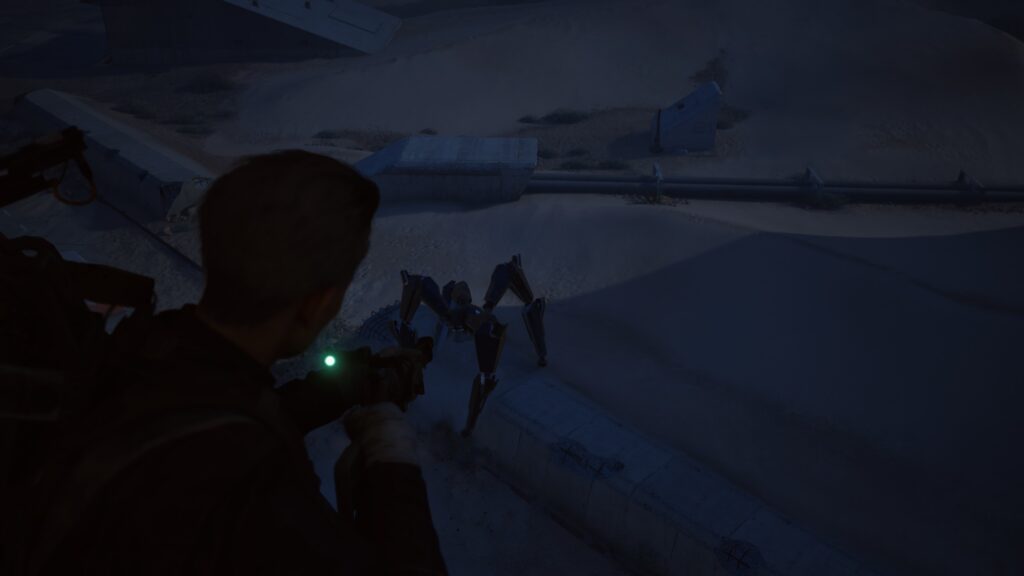
Targeting these joints (Kinetic Stress Points, per TCA) with focused explosive rounds can rapidly degrade the Golem’s stabilization, leading to momentary operational locks or—critically—uncontrolled mechanical tilting that exposes the far less protected upper torso.
Identifying the Main Power Conduits
A machine of the Golem’s scale requires massive, constant power throughput. CVT analysis indicates that the main energy conduits feeding the primary weapon systems and propulsion are often located externally to facilitate maintenance.

These conduits, usually running along the back of the shoulder segments or the underside of the main weapon bay, are highly sensitive to thermal stress. A direct hit with incendiary or high-energy rounds can overload the system, causing a temporary weapons failure or inducing a visible thermal flare that guides the DM to the Golem’s central cooling arrays.
Leveraging the Golem’s Targeting Rigidity
Despite its terrifying power, the Golem’s immense size limits its rate of rotation and vertical targeting range. This constraint is the core of the **Vertical Denial Interdiction** strategy.
Raiders utilizing the Grappling Hook to gain rapid elevation (above 20 meters) can position themselves outside the Golem’s primary field of fire, forcing it to enter a slow, non-optimal rotation sequence. During this slow turn, its vulnerable rear heat vents become exposed for extended periods, allowing for concentrated critical fire.
Exploiting the Armaments’ Heat Signature
The Golem’s signature weapons—often heavy plasma cannons or large-bore kinetic railguns—generate immense heat. Following an intense barrage, the Golem must expose its dedicated cooling fins, often located on the sides of the weapon housing. This brief cooling window is the most critical time for the DM to deliver an armor-piercing round to the exposed Thermal Stress Points. Teams must learn to count the Golem’s rate of fire and anticipate the exact moment the cooling phase begins.
Coordinated Vitiation Sequence
Bringing down a Golem is a coordinated effort demanding role synergy (TCT). The sequence must follow these steps:
- **Disruption:** Disruptors use Jammers or Shock Traps to momentarily slow the Golem’s targeting matrix.
- **Exposure:** Breachers use Fusion Charges to shatter the armor plating around the leg joints (Kinetic Stress Points).
- **Crippling:** The Golem slows and tilts. The DM targets the exposed rear power conduits or cooling vents.
- **Clean-up:** The entire team focuses on the primary weapon systems to prevent a final, desperate retaliatory attack.
Salvage Priority after Golem Destruction
The Golem yields the highest-grade resources. CVT teams must prioritize retrieving the primary **Fusion Power Reactor** and the hardened **Weapon Mount Actuators**. These components are essential for advanced Gadget upgrades (Tier III materials) and cannot be reliably scavenged from smaller ARC units.
Conclusion: The Victory of Precision over Power
The ARC Golem is designed to teach fear, but CVT proves that fear is merely a failure of analysis.
By dissecting its structural necessities and thermal requirements, Raiders transform the behemoth from an insurmountable threat into a complex system awaiting predictable component failure. The Golem is a testament not to ARC’s strength, but to the precision and tactical ingenuity of the Raider Resistance.
Leave a Reply